
















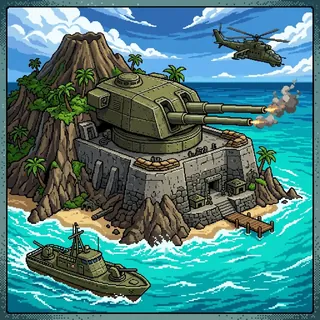
Operation: Iron Atoll: Six Turrets, Six Real Reasons to Exist
Making sure no single turret dominates, and why invisible submarines needed to be a fair, telegraphed lesson rather than a cheap ambush.
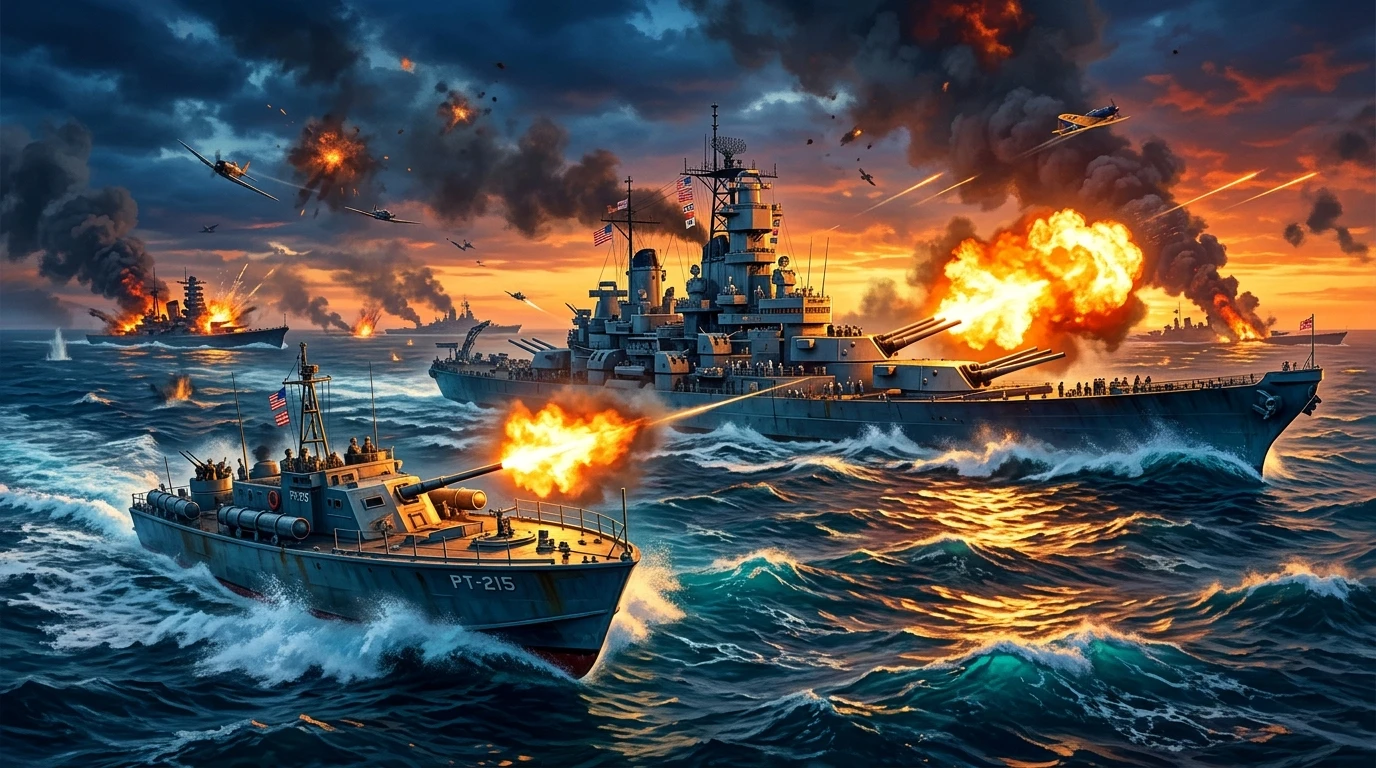
Six-plus turret types, sonar-gated submarines, and boss-scale Dreadnought flotillas — this is the most tower types I've ever had to balance against each other in a single defense game, launching alongside two other new games and a full leaderboard rollout on what's turning into one of the busiest days this site has had.
Every turret needed a wave type it's specifically the answer to
A tower-defense game with six-plus turret types risks a common failure mode: one or two towers end up strictly better than the rest, and everything else becomes a trap purchase nobody who's learned the game actually makes. Avoiding that meant designing each turret around a specific threat it counters clearly better than the alternatives — the Twin-Vickers autocannon against fast, numerous speedboats; the 155mm howitzer against slow, heavily armored targets; SAM batteries specifically against air threats and nothing else. If every turret is a good generalist, none of them feel like a meaningful choice. Making each one clearly best at one specific job is what makes reading an incoming wave and picking the right response feel like real strategy instead of just spending on whatever's cheapest.
Chunky pixel art had to keep dozens of units readable at once
A tower defense wave can put a genuinely large number of units on screen simultaneously, and the chunky retro pixel-art style isn't just a nostalgic aesthetic choice, it's doing real legibility work. Simple, high-contrast silhouettes stay identifiable at a glance even when a screen is crowded with a dozen different unit types moving at once, which a more detailed, realistic art style would struggle to maintain under the same density. Keeping every unit type visually distinct at a small scale, moving fast, in a crowded wave, mattered more here than it would for a game with fewer simultaneous units on screen at any given time.
Submarines had to be invisible without feeling unfair
Stealth attack submarines are invisible until a Sonar Radar outpost reveals them, which means Depth Mortars are functionally useless without first investing in sonar coverage — a real, deliberate dependency between two different turret types rather than every tower working in isolation. The risk with any "invisible enemy" mechanic is that it reads as cheap or unfair the first time it catches a player off guard. I wanted losing to an unseen submarine to teach a clear, fair lesson — build sonar coverage before submarines show up in a wave — rather than feeling like a random, unavoidable gotcha. That meant sonar had to be telegraphed clearly enough in earlier waves that ignoring it feels like a real, correctable mistake, not an ambush with no warning at all.
Speed toggles change what "difficulty" actually means here
Letting players accelerate combat waves at 1x, 2x, or 4x speed is a genre convention I wanted to include from day one rather than add later, because tower defense has a specific pacing problem — once your defenses are well-positioned, watching a wave slowly play out can feel like waiting rather than playing. Speed toggles hand control of that pacing directly to the player: someone confident in their build can blast through easy waves at 4x, while someone still reacting to a genuinely threatening wave can drop back to 1x for precise control. It's a small feature relative to the turret roster, and it does more for how the game actually feels to sit through than almost anything else I built for this one.
Boss flotillas needed to demand a build, not just more health
The Dreadnought-class super-copter and submarine boss flotillas aren't just reskinned regular enemies with inflated health bars — they're designed to specifically punish a build that's leaned too hard into any single turret type. A boss wave that only a diversified, well-rounded defense can actually survive retroactively validates or punishes every earlier turret choice, which is exactly the pressure test I wanted at the end of a theater — not a raw damage race, but confirmation that a player actually built a defense capable of handling every category of threat, not just the ones the earlier, easier waves happened to throw at them.
Multiple theaters had to escalate in more than raw enemy count
Spreading defense across multiple tactical theaters of operation meant each one needed its own reason to exist beyond "the same wave composition with bigger numbers." A later theater that just throws more of the same early speedboats at a player teaches nothing new and mostly just takes longer to clear. I built later theaters to introduce their own combinations — submarines paired with air threats forcing sonar and SAM investment simultaneously, for instance — so that progressing through theaters feels like the game is actually teaching new combinations of pressure, not just turning up a difficulty dial on content a player already fully understands from an earlier theater.
Why airstrikes and mines had to stay genuinely limited resources
Commander airstrikes and sea mines are powerful enough that making them freely spammable would have flattened most of the tactical decision- making the turret roster is built around — why bother reading a wave carefully and picking the right permanent tower if a cheap, repeatable airstrike solves everything regardless. Keeping both as genuinely scarce, situational resources rather than a spammable button meant they stay reserved for moments that actually call for them — a dangerous cluster of armored units, a boss wave closing in — instead of becoming the default answer to every problem, which would have quietly made the rest of the turret roster feel irrelevant by comparison.
Launching this alongside two other complete games today meant less total iteration time on any single one of them than a solo release would have gotten, and tower defense specifically is a genre where balance problems tend to hide until real players find the build that trivializes a wave I thought was well-tuned. I'm treating today's balance as a solid first pass, not a finished one, and I expect the turret roster to need real adjustment once defense layouts show up that I didn't personally think to try myself, the same way every other system-heavy game on this site has needed adjustment after real play found the edges I couldn't find alone.
More from the Devlog