
















Blink Stopped Being Small
A 5-sector gauntlet, Endless Survival, and decoys tempting enough to actually fool you — built on the March version's timing precision, unchanged.
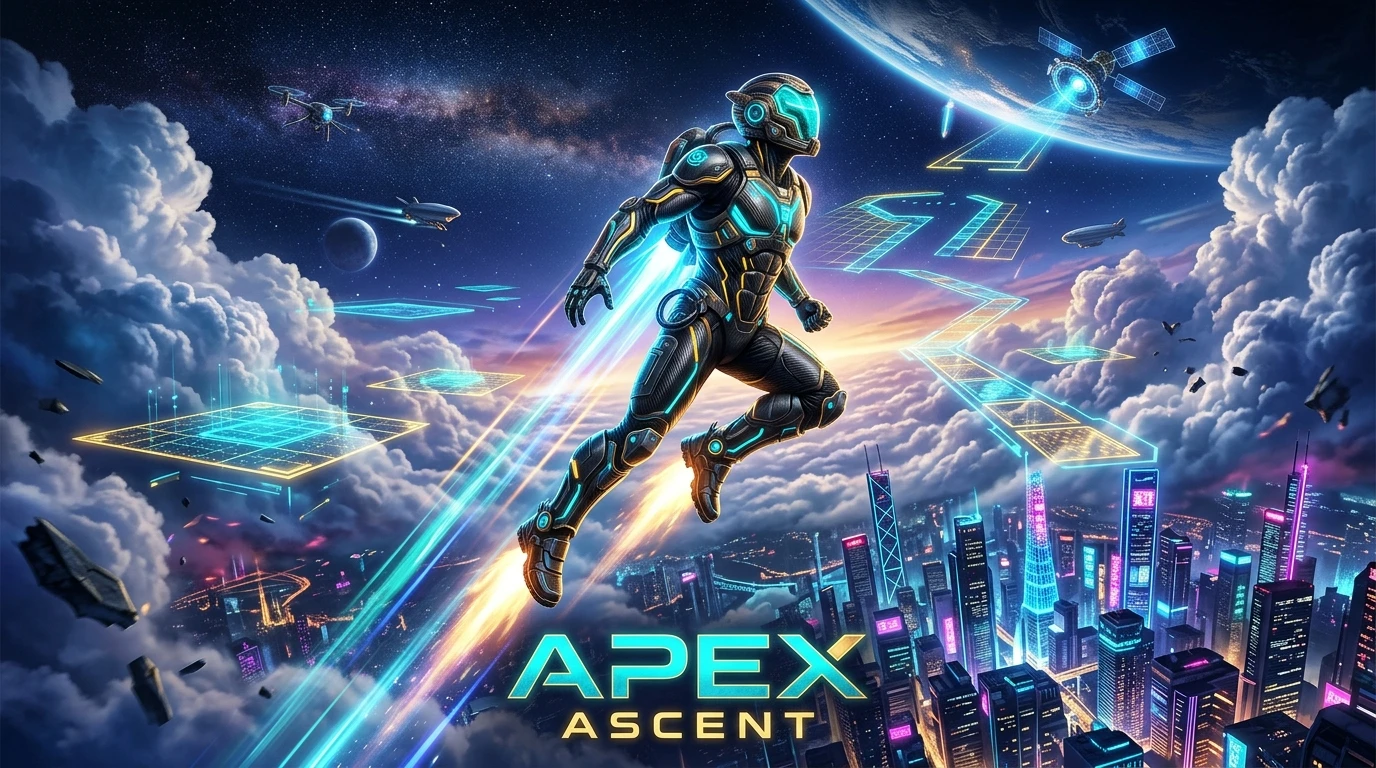
Back in March I wrote that Blink was "a dot, a click, a timer" and said I already knew it wouldn't stay that small. Today it stopped being small: a 5-sector ranked gauntlet, an Endless Survival mode with compressing reaction windows, decoy skulls you have to resist clicking, and a full procedural audio engine underneath all of it. This is the most complete rebuild I've done of anything on the site.
Shield management had to make Endless Survival feel different from a life counter
Endless Survival's shields could have been a simple life system — lose one on a mistake, run ends at zero — and I wanted them to feel like an active resource instead of a passive countdown to failure. Shields regenerate under certain conditions rather than only depleting, which turns shield management into an ongoing decision about play style rather than a fixed number of mistakes you're allotted before the run automatically ends. A player consciously playing more cautiously to preserve a shield, or pushing aggressively because they've got a comfortable buffer, is a much more engaged relationship with the resource than watching a static life counter tick down toward zero.
Decoys had to be tempting, not just present
The original version had exactly one kind of target and nothing to avoid. Decoy EMP Skulls needed to look similar enough to a real target at a glance that clicking one is a genuine mistake born of speed, not something trivially screened out by color alone. If decoys were obviously distinct, they'd add zero real tension — anyone paying attention would just never click them, and they'd be pure visual noise. Making them close enough in silhouette and color that half a second of actual recognition is required, rather than an instant reflexive read, is what turns "click the target" into "click the *right* target," which is a meaningfully harder and more interesting skill than the March version ever tested.
Five sectors had to escalate in kind, not just in speed
Calibration, Cluster Arrays, Threat Matrices with decoys, Drifting Warp Vectors, and the Neural Overdrive finale each needed to introduce a genuinely new complication rather than just running the same targeting test faster. Cluster Arrays tests rapid multi-target tracking. Warp Vectors adds motion prediction on top of raw click speed. Stacking five sectors that all just get faster versions of sector one would have been a much smaller effort, and a much less interesting gauntlet — the whole point of the 5-sector structure is that each one demands a slightly different flavor of attention, so the full gauntlet tests a broader set of reflex skills than any single sector could alone.
Endless Survival needed a different pressure than the ranked gauntlet
The ranked gauntlet is a fixed, masterable sequence — the same five sectors every time, which rewards learning and repetition. Endless Survival needed to be the opposite: an open-ended test with compressing reaction windows and shield management, where the actual skill is managing a shrinking margin for error rather than executing a memorized sequence well. Building both modes into the same overhaul meant supporting two genuinely different play patterns — practice-and-master versus survive-as-long-as-you-can — off of the same underlying target and decoy systems, which took real care to keep both feeling like first-class modes rather than one being an afterthought bolted onto the other.
Procedural audio had to react to skill, not just play a fixed track
Laser pings, critical chimes, EMP buzzers, and fanfares generated through a procedural Web Audio synthesizer, rather than pre-recorded sample playback, meant the audio feedback could react directly and precisely to what's actually happening — a critical hit's chime timbre tied to how fast the click landed, not a generic "hit" sound played identically regardless of performance. That's a meaningfully bigger technical investment than dropping in a folder of sound effect files, and it's what lets the audio feel like it's actually responding to skill in the moment rather than just decorating the visuals with sound.
The measurement precision I built in March had to survive five sectors of new complexity
Back in March, I spent real effort making sure click-to-target timing measured actual paint timing rather than whenever the spawning JavaScript happened to run, specifically because a raw-reflex game can't tolerate measurement noise the way other games can. Every one of today's new sectors and Endless Survival's compressing windows had to preserve that same precision under far more complex conditions — multiple simultaneous targets, decoys, moving warp vectors — without reintroducing the timing sloppiness that original effort was specifically built to eliminate. It would have been easy to let precision slip while focused on the new sector logic. Keeping it intact meant treating March's timing work as a hard constraint on every new system, not a solved problem I could stop thinking about.
Was I right to hold off in March?
Reading back my own March post, I said I wanted to ship the bare version and see if the core loop was fun enough to justify building on top of it before committing to any of this. I think that held up. Every system in today's overhaul — the decoys, the sector structure, the survival mode — is something I only had real confidence to build because the underlying click-a-target loop had already proven itself worth investing in. Building all of this in March, before that confidence existed, would have meant guessing at systems layered on top of a foundation I hadn't actually validated yet.
There's also a leaderboard now, which the March version explicitly didn't have — I'd said back then I wanted to sit with the raw millisecond numbers myself before committing to rank tiers I hadn't validated against real attempts. Having watched enough of my own runs across all five sectors since then, I finally trust the S+ Cyber Ninja threshold and the tiers below it to mean something real, rather than being an arbitrary number dressed up as a meaningful rank. That's another thing I'm glad I waited on rather than shipping a guessed rank system back in March alongside a version of the game that hadn't earned one yet.
More from the Devlog